


The VP of operations called me into his office. A multi-million dollar CapEX investment was over budget and behind schedule. Walking in I scanned the plant floor his office overlooked, searching for the machine I was here to discuss, but I couldn’t find it.
This was my first time back since I started sending the VP monthly reports on the plants he operated. He had scaled this plant into a billion-dollar international operation so I wanted to impress him, spending weeks revamping the reporting package. But we weren't here to talk reports.
We purchased a cutting-edge robot from a German company that would automate half the production operations. The ROI was a no-brainer but it was bleeding time and money. I threw on a hard hat and we walked the plant floor so I could see it for myself. It was MASSIVE, stretching across half the plant floor. I don’t know how I missed it when I first walked in.
The VP said, "Shipping took months. We flew in two techs from Germany to finish final setup. The machine's so complex no one in America knows how to configure it."
But when can we put it in service?
"They said it'll be done by the end of the week. Or... that's what I think they said. I don't speak German."
My Reporting Disaster
I laughed, happy the project had an end in sight. We ended up back in his office when the subject changed to my reports: "Why did Plant B's output drop in the last report you sent me? That can't be right." I panicked. He'd been running the operation longer than I'd been alive. When he says that can't be right, he's right!
He pulled up my report to show me my mistake, and I saw the problem right away. The tab he was using wasn't measuring output, rather all the outliers I had filtered out. I'd spent days adding unnecessary complexity to impress this VP. All I did was hide the one metric he needed. At least the Germans were providing ROI with their complexity. I was adding noise.
Why 95% of AI Projects Fail (And How Simple Beats Complex)
Business leaders need their teams to simplify complexity so when I was tasked with building an invoice processing agent, I decided I would make it as simple as possible. When 95% of businesses are not able to produce ROI on their AI investment, building a simple, boring solution is the answer.
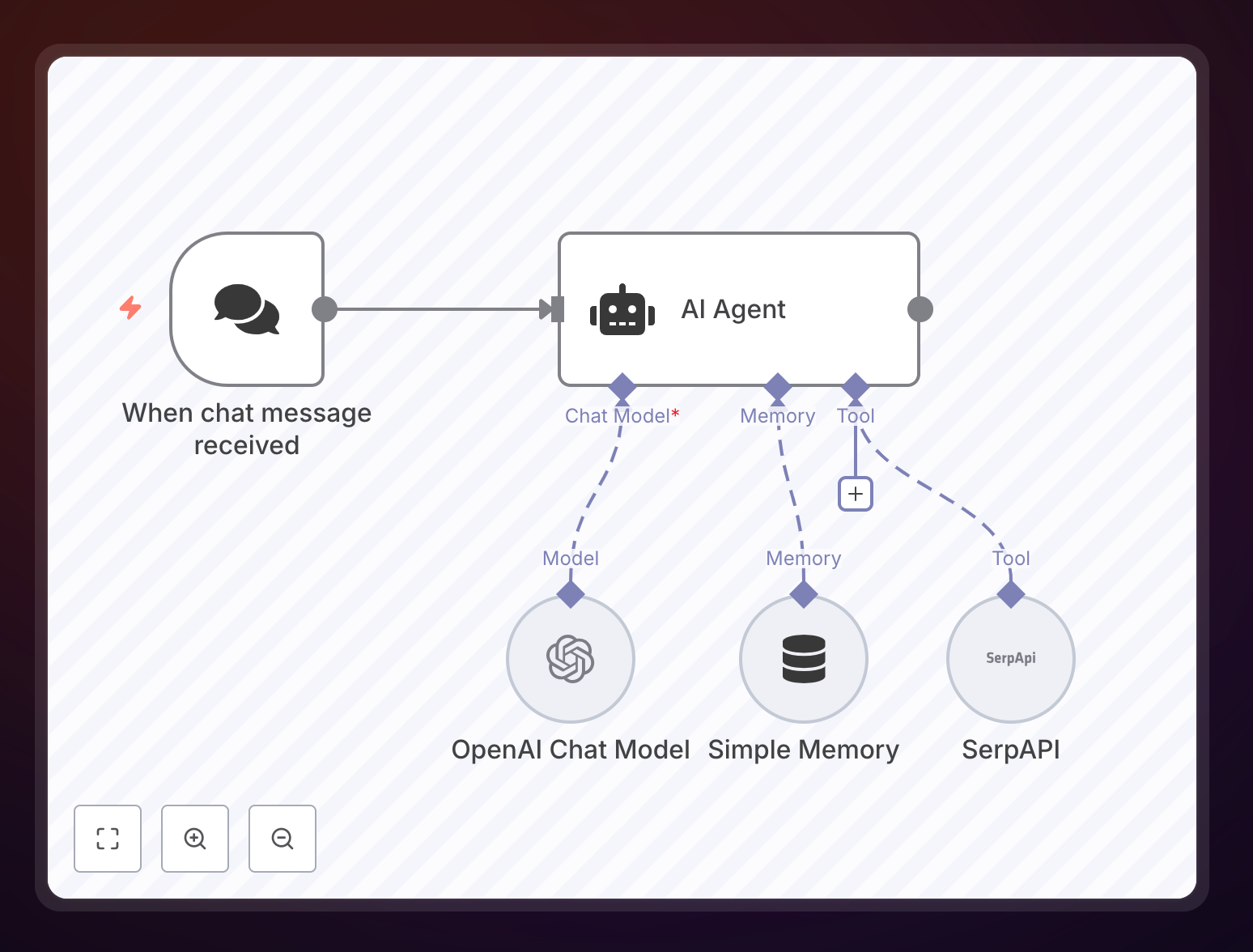
I built the agent in n8n, an automation tool with a drag-and-drop interface, making it easy for anyone to integrate with the tools they use.
First Principles Approach to Invoice Processing
To design the structure of the agent, I used first principles to cut out all the noise, focusing only on the facts.
For accounts payable, that means four stages:
Recognition: We purchased a good/service, creating a liability
Recording/Verification: Vendor sends invoices → Confirm accuracy → Update records
Payment: Pay the vendor
Reconciliation: Update our records after vendor receives payment
Tools Used: N8N and Mistral (Nothing Fancy)
I focused on the recording/verification stage because creating an agent that does everything would have been a complex disaster. The more an agent is tasked with, the more chances it breaks. Finance teams already distrust AI's non-deterministic nature. But this weakness becomes a strength for invoice processing. No two invoices look the same with every vendor using a different format.
AI's biggest strength is turning unstructured data into structured output.
An invoice into columns of a spreadsheet.
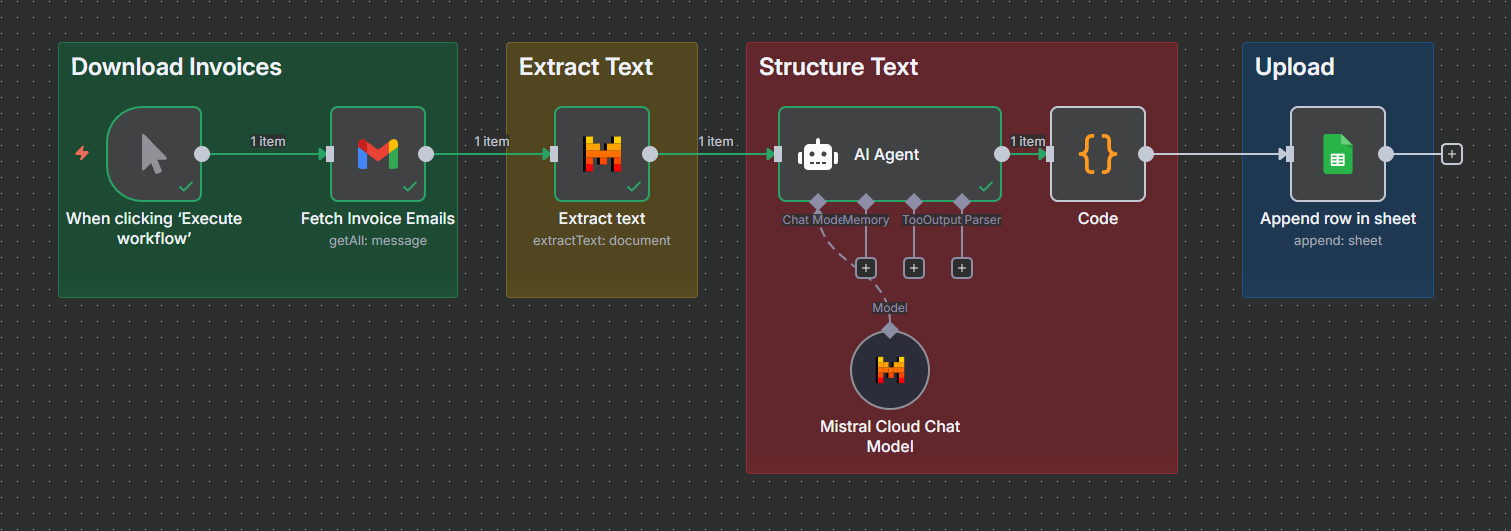
I used Mistral's OCR to extract text from the invoices received, then Mistral's LLM used the extracted text and structured it in the format needed: vendor name, payment amount, and due date. The system now automatically downloads every invoice, extracts important info, and saves it in a spreadsheet.
Finance Teams Need Trust Before Features
"But you're not using memory, reasoning, or tool calls in this agent."
Advanced features can be added once the team is comfortable with the tool. N8N helps them see the steps agents take in real time. When they build it themselves, they can fix it when it breaks. They understand why it works.
Once they understand the patterns, they build new solutions on their own. The team tests it, breaks it, fixes it. Compares what the agent does against what they used to do by hand. Then they decide what to build next.
What Simple AI Delivers
Making the agent simple was hard for me. When I created the report for the VP, I wanted to give him all the tools and information, but what he really needed was one metric and the story. Same lesson here. No overseas techs required.
Catch ya next week! - Dave 🎣

